
From brand launch to brand adoption

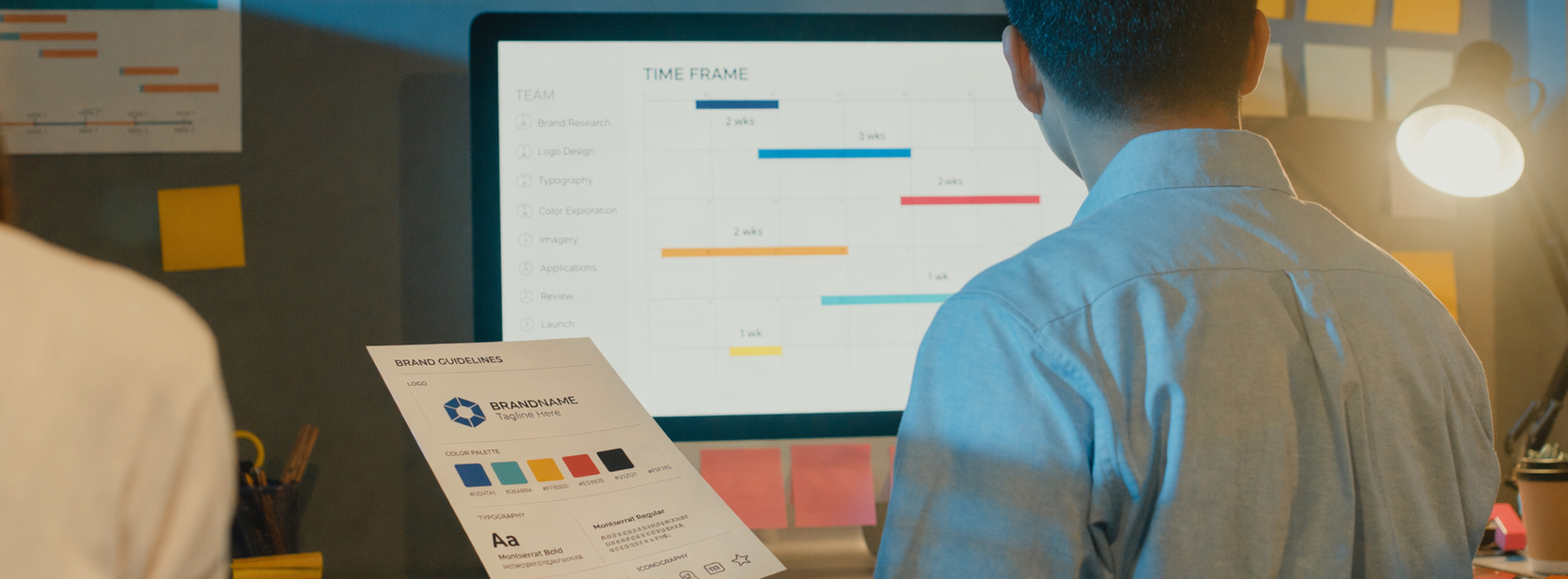


Rebranding is a big, high-stakes lift — months (sometimes years) of strategy, research, creative and alignment all building to one big launch moment. Then the switch flips, the new brand goes live… and everyone goes right back to doing things the old way.
That's not a creative failure. It's a change management failure.
The best brand in the world could fail or lose its sizzle if it doesn’t bring people along the journey. The rebrand that doesn't stick almost always overlooks a critical strategy: change management and change communication.
Your rebrand isn’t the problem. Your rollout is.
Change management isn't a town hall. It's not a launch video or a brand guide. And it's more than a communications plan, although that's where many organizations stop. True change management is a structured, sustained discipline for supporting people through the transition with clarity, confidence and authentic buy-in.
Here's the distinction that matters: communication tells people what is changing. Change management ensures each person understands why, feels motivated to support it, knows what to do and is equipped to actually do it. One informs. The other transforms.
Keyword = each person. Organizational change takes shape one person at a time. That's what makes it hard. And that's why strategic change management is crucial for rebrand success. Change management is what determines whether your organization can actually deliver on the promise your brand launch just made – and keep delivering on it.
Without it, you get the two most common rebrand failure modes:
Confusion – People don't understand why the brand changed, so they quietly ignore it or actively resist it.
Decay – The brand is enthusiastically adopted at launch, then gradually reverts to old patterns because there was no infrastructure to sustain it.
Both are avoidable. And both start with investing in the people side of the rebrand, not just the visual and strategic side. We recommend an inside-out approach.
Start before the brand is ready.
Most organizations treat change communication as a launch-week activity. But it should start much earlier. People need to be engaged in the strategy phase, and sometimes earlier than that, before the decision to rebrand is even made.
Measure your brand before you move it.
Understand what employees and customers value most about your current brand – not so you preserve it entirely, but so you know what to honor, what to evolve and what you might lose if you're not careful. These insights are gold for both your positioning work and your communication strategy.
Fix what's broken first.
A rebrand amplifies what already exists. If your product experience, service delivery or internal culture has unresolved problems, a new brand won't solve them – it will put a spotlight on them. Rebranding into a broken system is a fast way to erode trust.
Build the tent early.
The more people feel like co-creators of the new brand, the more ownership they take in representing it. This doesn't mean design by committee; it means strategic inclusion. Bring employees and key stakeholders into the process at the right moments. Gather their input. Acknowledge what you heard. They will tell that story to everyone they know.
Use a framework.
One of the most proven frameworks for managing the human side of change is Prosci's ADKAR Model, which maps the five stages a person moves through when adopting change:
Awareness – Why is this change happening?
Desire – Do I want to support it?
Knowledge – Do I know what to do?
Ability – Can I actually do it?
Reinforcement – Am I keeping up with this change?
What makes ADKAR particularly useful is its diagnostic power. When a rebrand is stalling, you can pinpoint exactly where the breakdown is happening. Is the issue that people don't understand the "why", or do they understand it but disagree with it? Do they know the new brand guidelines but feel unsure how to apply them in client-facing situations? The intervention for each is different.
When you map your communication and training activities to each ADKAR stage, you create a clear adoption roadmap with measurable checkpoints. Information is not persuasion. Knowing about a change is not the same as being ready for it or committed to it.
Here’s a few practical ways to build a change communication strategy that actually drives adoption:
Activate the brand from the inside out.
Your first audience is your employees and the people inside your walls. Before the market ever sees the new brand, your people should understand it, believe in it and know how to bring it to life. Internal communication isn’t just preparation — it’s momentum-building. When employees are engaged early and equipped to represent the brand with confidence, they become your most credible and consistent channel to the outside world.
Arm your brand ambassadors.
Your employees are the most credible, highest-reach channel you have. Equip them not just with the brand guide, but with the language, the stories, and the confidence to represent the new brand authentically. And recognize those who do it well, because public leadership acknowledgment is one of the most cost-effective change accelerants there is!
Use multiple channels with purpose.
Don't rely on any single channel. Town halls build awareness and signal importance. FAQs and toolkits address knowledge gaps. Manager-led conversations help at every stage. And remember: most people need to encounter a message multiple times before it changes their behavior. Build repetition into your communication plan.
Listen as much as you broadcast.
The organizations that navigate rebrands most successfully treat communication as two-way. Collect feedback throughout the process. When employees or stakeholders surface hesitation, confusion or resistance – that's critical feedback and data. Evolve your messaging to address what you're hearing. This responsiveness also builds trust and buy-in.
Make the wins visible.
Don't wait until the rebrand is "complete" to celebrate progress. Spotlight early adopters. Share stories of the new brand showing up in real client interactions. Highlight departments or teams that are living the brand in their work. These moments do two things: they reinforce the behavior you want and they show everyone else what "good" looks like.
Even the best rebrands lose momentum.
Here's the uncomfortable truth most brand launch plans won't tell you: the day the new brand goes live is not the end of the project.
Brand adoption and maintenance requires sustained effort. The ADKAR model ends with “Reinforcement” for a reason. The most resilient rebrands build ongoing rhythms into their change communication strategy: regular reminders, updated training as the brand evolves, recognition programs that keep brand behaviors alive and leadership that continues to model and reference the new identity long after the launch party.
Done well, what starts as a visual overhaul becomes a genuine cultural shift. The brand isn't just something the marketing team maintains. It's something the entire organization lives out.
That's when a rebrand actually delivers on its full potential.
:quality(80))
:quality(80))
:quality(80))
:quality(80))
:quality(80))
:quality(80))
:quality(80))
:quality(80))
:quality(80))
:quality(80))