Alloy joins Pantheon's P1 charter partner program



If your marketing team waits on a developer to change a headline, and your developers would rather work in React than patch PHP, you're not alone. Plenty of teams still run on older WordPress builds they’d rather not have to touch. They want AI to help them create and update content faster, but not at the cost of a brand that drifts a little further with every new page.
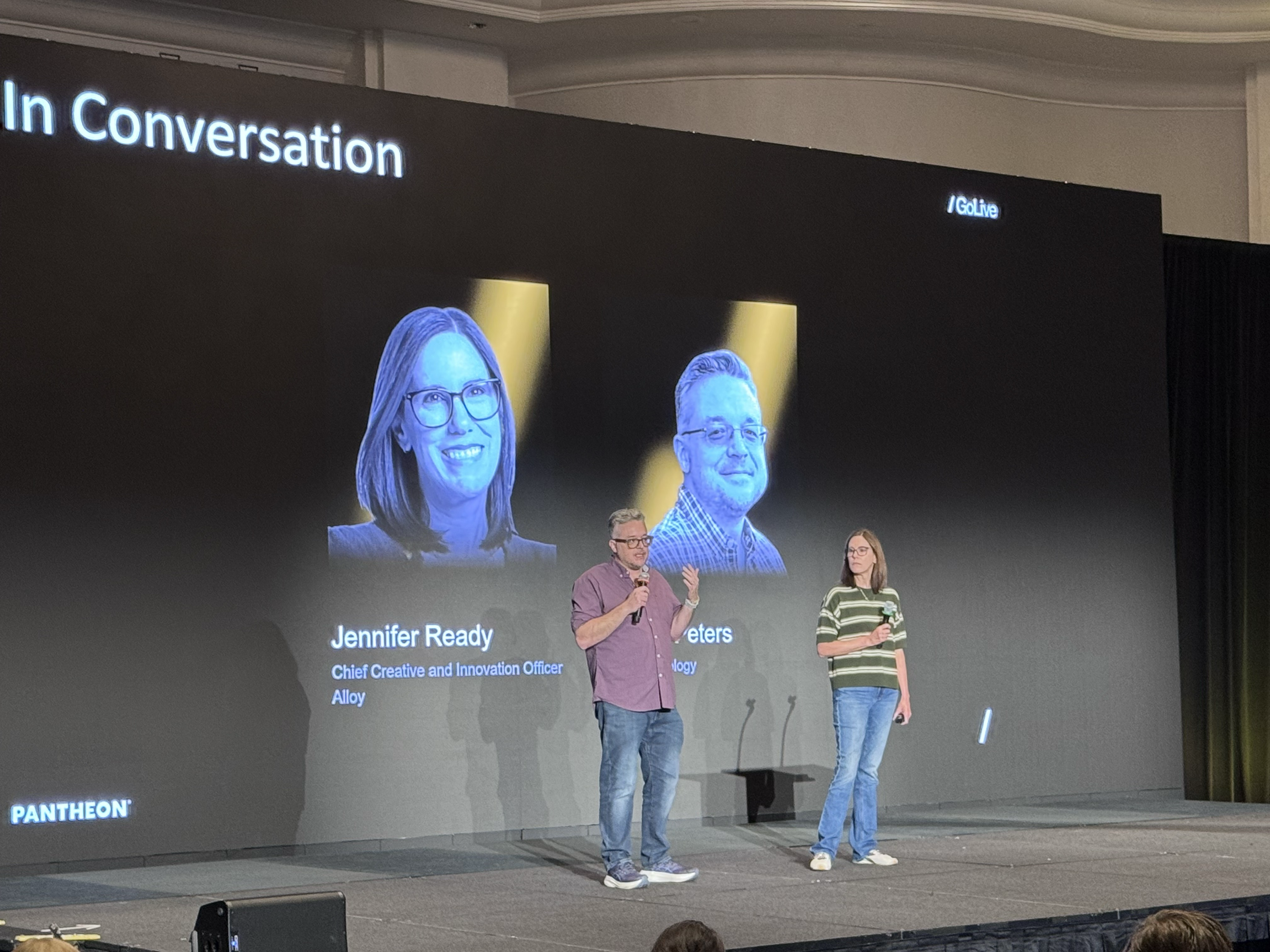
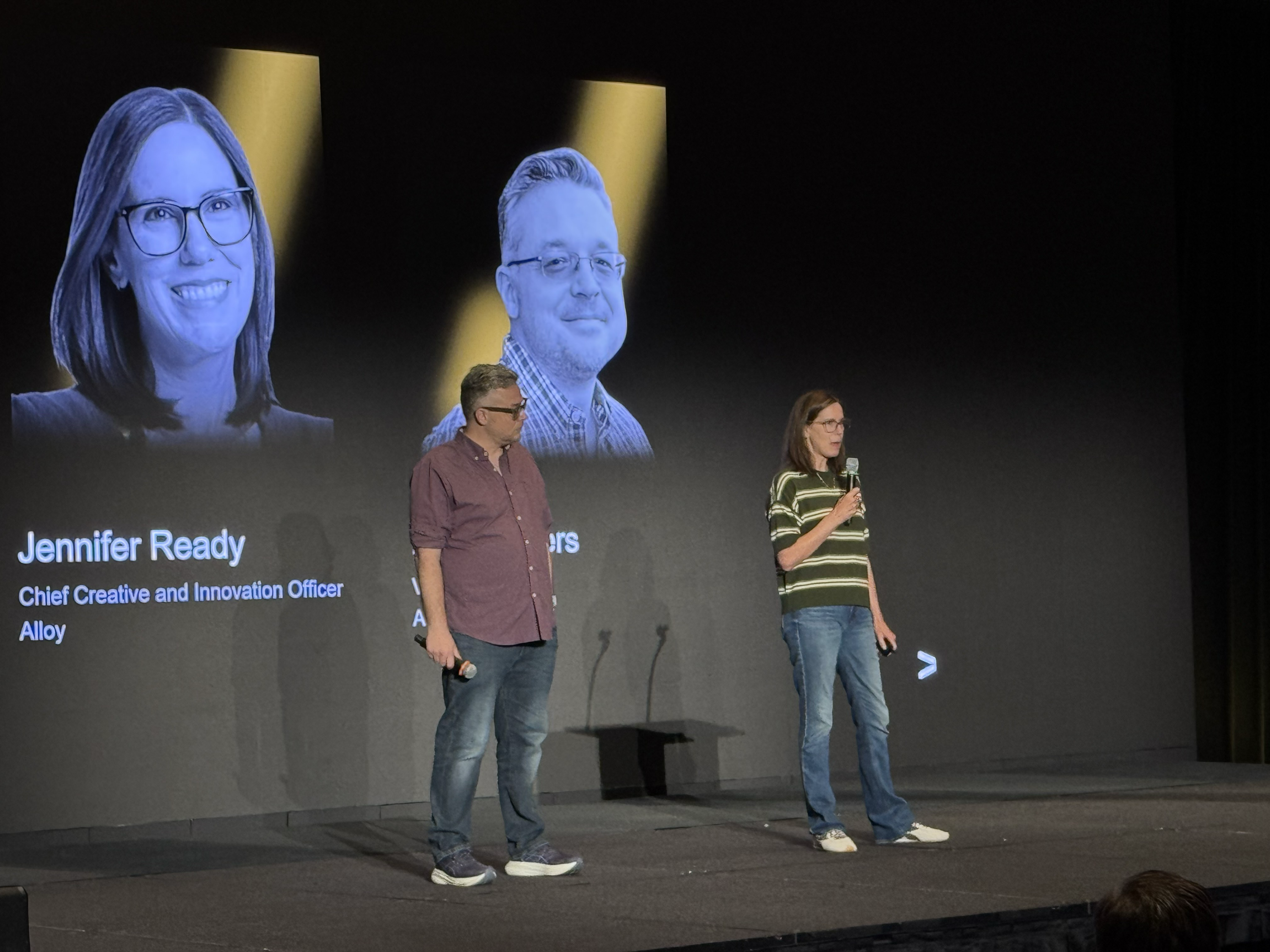
That's the problem Pantheon set out to solve with P1, the world’s first AI-native web composition layer it unveiled on October 6 at its first /GoLive conference in Miami. Alloy is one of four agencies in the P1 Charter Partner Program, and we didn't wait for the keynote to start building. A week before the announcement, we launched the new phobio.com on P1 and Next.js. The day after, Jennifer Ready, our Partner and Chief Creative Officer, and I took the main stage at /GoLive to share how it went.
The opportunity to work on P1 fit well with how Alloy is built today. We’re half marketing, half technology, and a large portion of our web work now runs on JavaScript and React stacks like Next.js and Astro. P1 uses technologies we already love, and matches the design-system and component-first way we work.
What P1 changes for marketers
Pantheon calls P1 "the first AI-native web composition layer." Josh Koenig, Pantheon's co-founder and SVP Marketing, puts it more plainly in his announcement: "a governed way for people and AI to create and evolve web experiences." His line that stuck with us: "AI should remove toil—not remove accountability."
For marketers, that means editing pages visually with the same React components and design system the developers built, while P1 pulls off-palette choices back in line. Zappy, Pantheon's built-in agent, drafts pages for a person to review, so nobody starts from a blank page. Workstreams let people build content in parallel without touching the live site, and nothing goes out until someone reviews and publishes it.
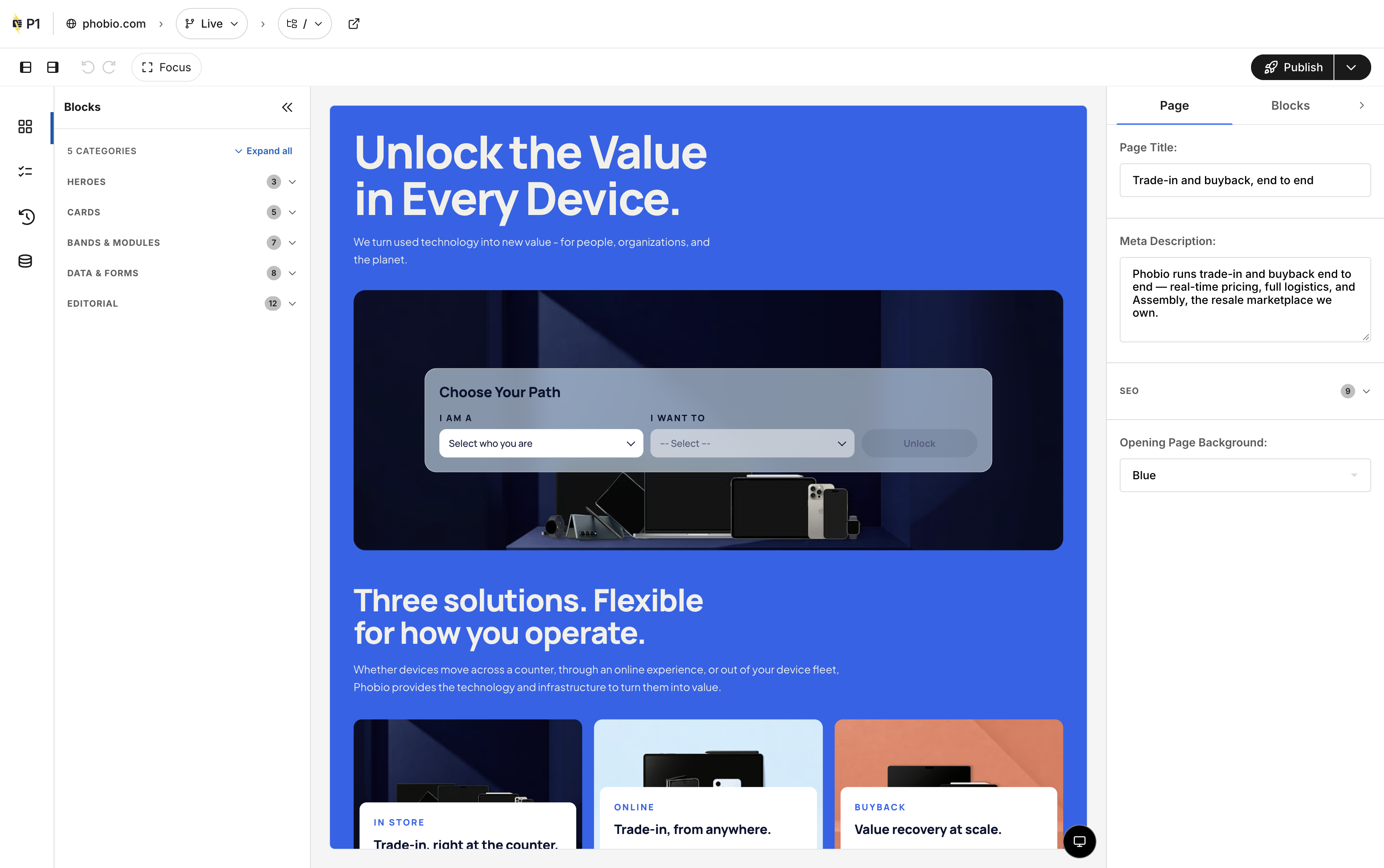
P1 can work in tandem with existing CMSs like WordPress or Drupal if that’s how you like to maintain existing structured data; it doesn’t have to replace them. Pantheon positions P1 as an added path that can work alongside the systems you already have. It's in a limited, paid beta and as a charter partner, we can help you figure out whether it fits your team.
Phobio: from WordPress to P1 in weeks
Phobio is an Atlanta company that’s run trade-in and buyback programs for retailers, carriers and businesses since 2010. This year the company rolled out a new brand, and its website had to carry it.
The Phobio site had run on WordPress for years, and that setup no longer fit the team. Marketing couldn't update pages without friction. Phobio's developers work in React, so PHP work went to outside contractors. The new platform had to give developers a modern foundation they wanted to use, give non-technical staff a practical way to create and update content, and give leadership a simple, elegant front end for the new brand.
We partnered with Phobio and kicked off the website redesign at the end of June. Brand discovery, a new sitemap and wireframes ran through July. Phobio’s technical leadership agreed on P1 in August, and final page designs were approved in early September. With the launch date tied to the conference, we built, loaded and tested the site in about four weeks, on a platform that hadn't been publicly announced yet. The new phobio.com went live at the end of September.
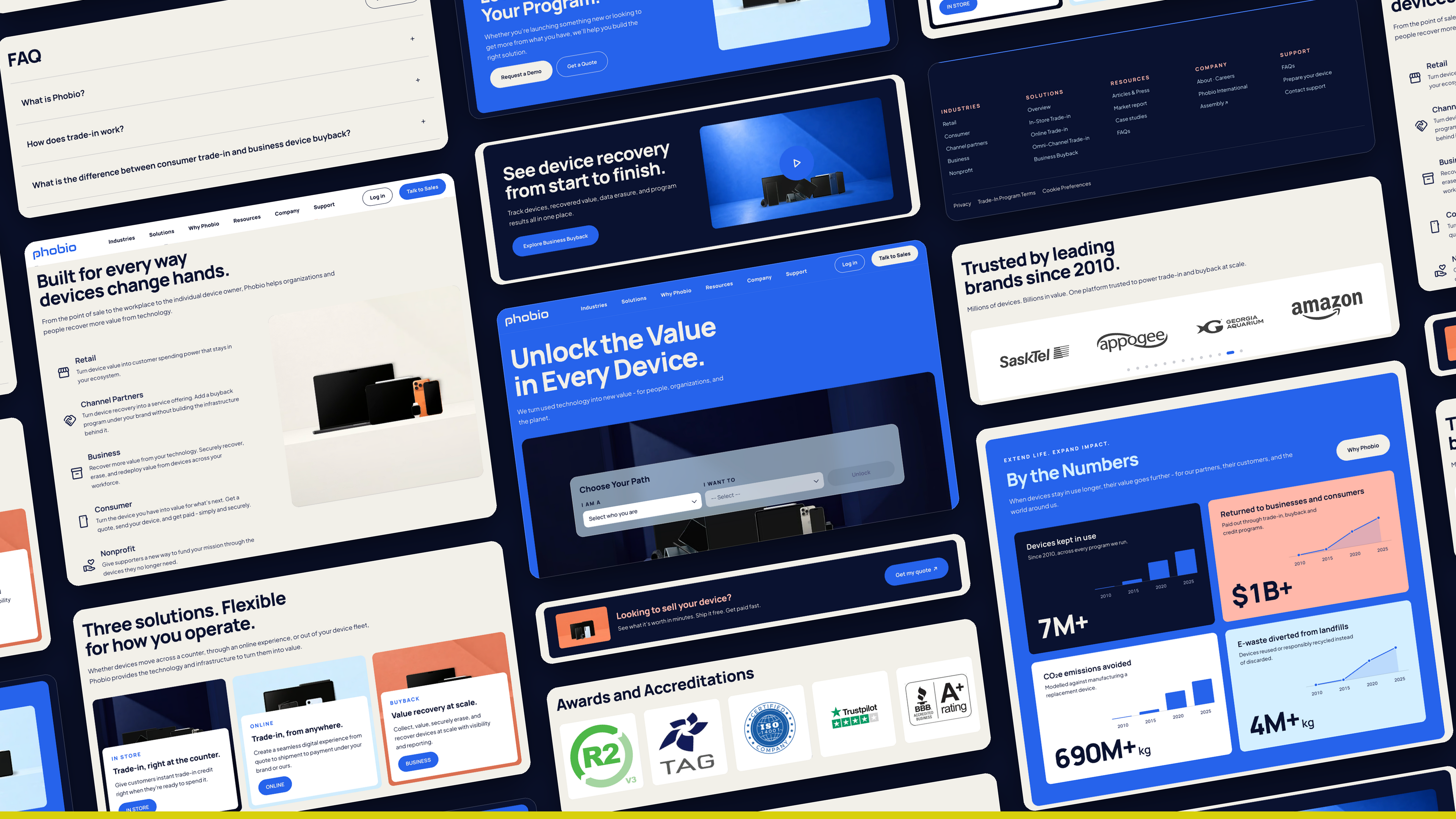
P1 matched the team, both ours and Phobio’s. It's React and Next.js through and through, with no PHP. Its editor handled the page building needs of Phobio’s team, and it gave us full control of the front end, which mattered to both of us. Workstreams let people work in parallel and keep releases simple.
The site pairs P1's visual editor with a React-based atomic component library we developed. It includes industry pages, animated stat and data visualization modules, and a resource library, all with the new brand carried through.
Our judgment, not just our early access
The /GoLive panel asked a question every agency should be asking: when clients can do more of the everyday work themselves, what changes?
Jennifer's answer: when a platform like P1 moves everyday work to the client, an agency's value moves toward the places where expertise and judgment matter most. That means building brands, setting architecture, evolving systems and helping clients make bigger, better decisions about the web. Early access is a head start. Knowing what to do with it is what lasts.
Recently I asked whether an AI-enabled CMS could be the content team's holy grail. I set four tests. It starts from what already works. It knows a consistent component vocabulary. It has judgment, not just access. And it keeps people in the publishing loop. In our view, P1 is built to pass all four, giving marketers, developers, and AI agents one governed space to work in.
What's next
As a charter partner, we'll keep building with Pantheon: shaping where P1 goes, creating reusable components and templates, and sharing what we learn along the way. If your team is stuck on a legacy build and weighing P1, or wondering whether it fits your stack, let's talk.